🎵
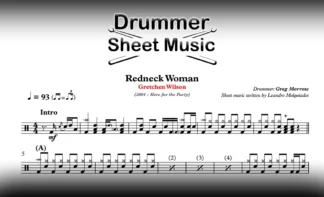
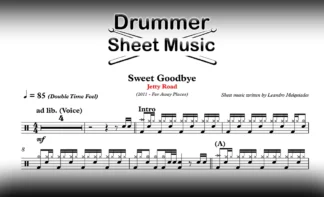
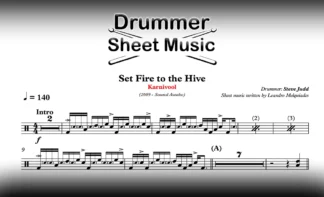
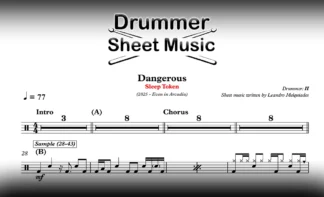
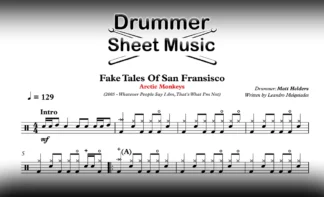
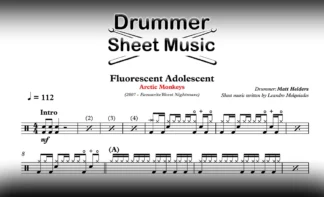
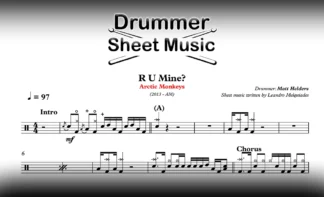
Over the years, I’ve developed my own approach to drum notation focused on visual clarity, didactic structure, and easy reading during performance. My goal is to make sure any drummer can play confidently without having to “decode” the sheet music while performing.
✔ 1. Clean and objective notation
I avoid visual clutter and unnecessary symbols. Everything on the page is there to help — not to distract.
✔ 2. Smart use of voices (stems)
Many transcriptions use two voices for everything, which often creates:
- excessive rests
- artificial alignments
- slower reading
- visual confusion
In my method, I use two voices only when it truly improves readability. When I do use them, I typically separate hands (voice 1) and feet (voice 2), which follows the natural logic of drumming and makes the notation instantly intuitive.
✔ 3. Clear and practical repetitions
Instead of long repeat signs that require counting many bars, I prefer using the % repeat symbol, which allows the drummer to:
- follow the flow of the music
- count measures more easily
- stay focused on playing
I avoid structures like “repeat 16 times,” which force the musician to memorize sections and break concentration during performance.
✔ 4. Focused on real drummers
My transcriptions are designed for drummers who are:
- studying
- rehearsing
- performing live
- learning songs quickly
The notation is organized so the drummer can read with fluency and confidence.
✔ 5. Consistent and professional formatting
All charts follow a clear visual standard that helps with:
- quick reading
- section identification
- understanding the song structure
- efficient practice
🎯 Why this matters
Clear notation saves time, reduces mistakes, and makes practice more productive. My commitment is to deliver sheet music that truly helps the drummer — not just a transcription for the sake of transcription.